

Pool Test Kits Buying Guide: What to Look For in 2026
🏆 Top Picks at a Glance
 #1
#1
Best Overall
Our Top Picks
Affiliate disclosure: if you buy through these links, we may earn a commission at no extra cost to you.
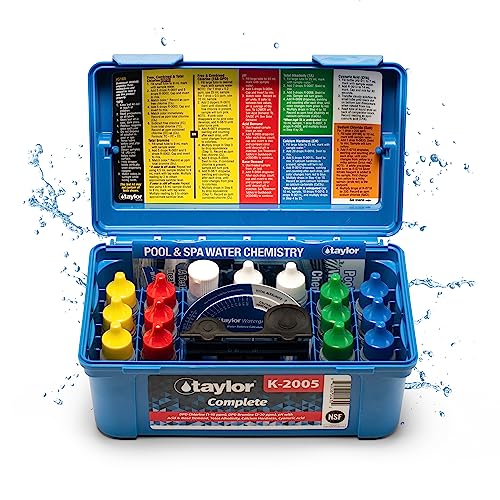
Taylor Pool Water Test Kit, Complete Swimming Pool Water Test Kit, for Chlorine, pH, and Alkaline Levels, Ideal for Pools, Hot Tubs, and Spas, 1-Pack
$91.85
Check Price →
#2
Runner Up
Taylor K2005 High Range Swimming Pool Total and Free Chlorine Bromine Alkalinity Calcium Hardness Base and Acid Demand pH DP Test Kit
$72.0
Check Price → #3
#3
Best Value
Taylor K-1005 DPD, 9-in-1 Pool Test Kit for Free & Total Chlorine, Bromine, pH, Base Demand, Alkalinity, Calcium Hardness, Cyanuric Acid | Made in The USA, 1 Count
$51.99
Check Price →⚡ Quick Answer
Your pool might look blue and clear on the surface, but that water can be chemically dead, corrosive, or toxic right below the skin. Think of a test kit less as an accessory and more as the essential diagnostic tool for your entire pool ecosystem—alongside your pump, filter, heater, and cover. Even if you run a high-tech robotic cleaner or install a salt system, water that isn't chemically balanced ruins equipment faster than anything else, clogging filters and corroding heater components. This 2026 buying guide cuts through the marketing fluff to tell you exactly what numbers need measuring and which kits will actually hold up when it's scorching hot or freezing cold.
Table of Contents
- The Big Three: Why These Chemicals Matter Most
- Beyond Basics: Testing for Salt, CYA, and Metals
- Liquid Drop vs. Strips: Reading the Cost of Inaccuracy
- Hot Tub Specifics: Keeping Spa Chemicals in Check
- The Technology Trend: Digital and App-Based Testing
- Frequently Asked Questions
- Frequently Asked Questions
Taylor Pool Water Test Kit, Complete Swimming Pool Water Test Kit, for Chlorine, pH, and Alkaline Levels, Ideal for Pools, Hot Tubs, and Spas, 1-Pack
$91.85Check PriceThe Big Three: Why These Chemicals Matter Most
When you are starting down the path of water chemistry, ignore everything on the shelf before picking up pH, Free Chlorine, and Alkalinity. Think of these as the foundation; without them, nothing else will work, regardless of what your robotic cleaner is doing or how much sanitizer you are dumping in. pH levels dictate whether your chlorine actually kills bacteria or sits useless; if it's too high, chlorine won't disinfect. If it's too low, your pool equipment rusts and skin gets irritated. These three parameters need to be tested before every single chemical adjustment.
Look for kits specifically designed to check these ranges accurately. Many cheap plastic testers will show you the pH is 7.2 when it's actually 7.6, leading to massive overshooting errors that cost money and ruin swimmer comfort.
Beyond Basics: Testing for Salt, CYA, and Metals
In 2026, we see more salt systems installed than ever before. If you have a salt generator or silver ionizer, standard pool testers won't tell you if your system is functioning correctly. You need to check that the cell voltage is safe for swimmers, not just that there is salt in the water. Similarly, Cyanuric Acid (CYA) is the chlorine stabilizer that often confuses beginners. If your CYA is too high, you don't actually have "no chlorine"—you have a situation where no amount of standard shock will work until you change the chemistry entirely.
Furthermore, if you are running an iron-rich soil or copper pipes for pH balance, metals can cause green pools. A standard kit won't catch metals; you need a dedicated test strip with a specific meter range to see those traces before they permanently stain your filter media.
Liquid Drop vs. Strips: Reading the Cost of Inaccuracy
You will walk past plastic test strips in every box, but as a professional, I can tell you the truth about them. Strips rely on a chemical reaction inside the paper matrix that creates color changes. While convenient, the accuracy degrades quickly when humidity is high—exactly like it is outside during pool season. If the result falls between colors (e.g., yellow vs. green), strips often give you a false reading of 2 ppm chlorine when your water might be safe at 3 or dangerous at 1.
Liquid reagent drop tests represent the standard for longevity and reliability. You add drops to a sample, shake it up against a scale, and measure the chemistry precisely. It is slightly more time-consuming but saves money in the long run because you aren't buying chemicals to fix unbalanced water caused by a bad test reading in the first place.
Hot Tub Specifics: Keeping Spa Chemicals in Check
Do not use pool test strips in your hot tub, ever. The higher bather load and warmer temperatures create different chemical dynamics for spa chemicals compared to outdoor pools. Standard pH and chlorine ranges for a spa are tighter than a swimming pool; you need specific test logic that understands the difference between "Free Chlorine" and "Total Bromine."
Spa water chemistry is also different due to the higher temperature. If your test kit cannot handle the thermal variance or offers distinct ranges for pH 7.2–7.6 rather than the standard 7.0–8.4, you need to be extra careful. A dedicated spa kit will tell you when your sanitizer levels are low after a heavy night of partying without swimming pool buffers throwing off the reading.
The Technology Trend: Digital and App-Based Testing
By 2026, the digital testing trend is becoming standard, not just a novelty. These devices use sensors that measure conductivity rather than color comparison. They are highly accurate and integrate with apps that can automatically notify you when your free chlorine drops below safe swim levels or when pH needs adjustment.
These gadgets pair well with smart pool monitors (which read sensors in your pump flow). While they offer convenience, remember that electronics must be calibrated regularly against a manual method. A digital device is great for tracking trends over months but should never replace the tactile check of the liquid drops when you are doing a major chemical shock or closing up the season to avoid corrosion damage during winter storage under your pool cover.
Frequently Asked Questions
Are digital testers accurate?
Digital testers are very accurate for pH, but standard color charts used in app-based testing can sometimes struggle with turbid water. Always verify your digital reading with a liquid drop test weekly if possible.
How often should I change my test kit?
Liquid bottle tests generally last for about 250–500 individual tests depending on exposure to light and heat. Plastic strips usually degrade within a month after opening due to humidity.
Can I test tap water samples instead of pool water?
You should not do this. Tap water has different chemistry characteristics (different chlorine, hardness, and pH) which will skew your results compared to the actual pool water you are maintaining.
Why is my kit giving me "no color change" for chlorine?
Your water might be so heavily chlorinated that it bleached out the testing scale immediately. You need fresh reagents or dilute the sample to get a proper reading.
Is salt safe for my skin if I don't test it?
High salt levels are not toxic, but they can degrade stainless steel equipment and corrode pool floats. Always check your salinity when the system alarm goes on or after heavy rain dilutes the water.
How do I dispose of broken test kit chemicals?
Never pour liquid reagents into a storm drain or down the toilet without dilution as they are caustic. Mix them with cat litter or garden soil in heavy plastic and dispose of it with household trash.
Ultimately, an investment in a high-quality test kit in 2026 isn't about buying a fancy gadget; it is about securing the health of your filtration system, extending the lifespan of your pump and heater, and ensuring your water remains balanced for swim season after swim season. Don't trust your eyes—trust the data.
Frequently Asked Questions
What is the best way to test pool water for chlorine and pH?
Use a reliable digital test kit for accurate readings. These kits often include test strips or liquid reagents that measure chlorine, pH, and other critical parameters, ensuring your pool water is safe and balanced.
How do I choose the right digital pool test kit?
Look for kits that test for pH, chlorine, and total alkalinity. Consider ease of use, accuracy, and whether they include additional tests for metals or CYA, which are important for maintaining a healthy pool environment.
Is it worth investing in a digital pool test kit over test strips?
Yes, digital test kits offer more accurate and consistent results compared to test strips, which can be affected by user error or lighting conditions. They are especially beneficial for regular pool maintenance and long-term water balance.
How do I test for salt in my pool water?
Use a digital salt test kit or a test strip specifically designed for measuring salt levels. Salt levels are important for saltwater pools and can affect the overall balance and equipment longevity.
What is the best way to test for cyanuric acid (CYA) in my pool?
Use a digital CYA test kit or a test strip that measures CYA levels. CYA helps stabilize chlorine but can build up over time, so regular testing is essential to maintain proper chemical balance.
How do I test for metals in my pool water?
Use a digital metal test kit that detects common metals like copper and iron. High metal levels can cause staining and damage to pool equipment, so regular testing and proper treatment are necessary.
What is the most accurate method for testing pool water chemistry?
Digital test kits provide the most accurate and reliable results for pool water chemistry. They allow for precise measurements of key parameters like pH, chlorine, and total alkalinity, which are crucial for maintaining a safe and balanced pool environment.


