

How To Choose Pool Filters For Easy Maintenance
Choosing a pool filter is really a decision about the maintenance routine you are willing to follow. The right filter matches your pool volume, pump flow, water-care habits, and tolerance for rinsing, backwashing, or handling filter media, so the water stays clear without wasting chemicals or replacing equipment too soon.
Choose a cartridge filter if avoiding backwashing matters most, a sand filter if you are comfortable with pressure-based backwashing, or a D.E. filter if finer filtration is worth the added powder handling and cost. Size the filter using pool volume, media requirements, and pump flow rather than tank appearance alone, and follow the manufacturer's specifications. Record the clean-filter pressure, clean the filter when pressure rises about 8–10 PSI above that baseline, and keep the water balanced so the filter is not doing all the work.
Quick Answer
Table of Contents
Our Top Picks
Affiliate disclosure: if you buy through these links, we may earn a commission at no extra cost to you.
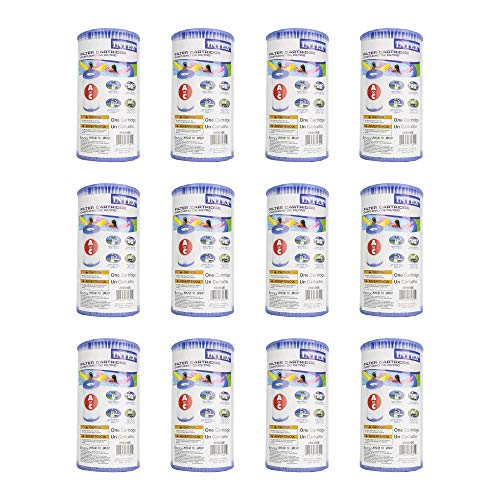
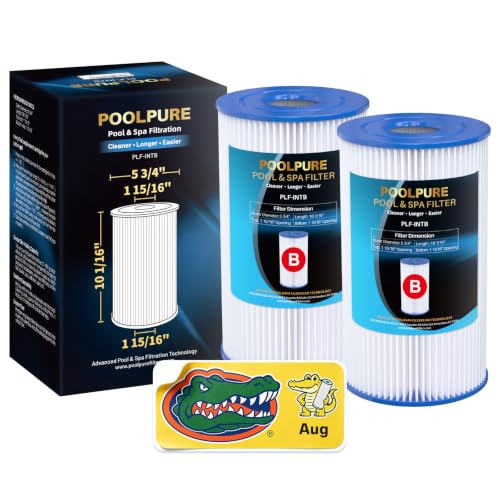

Choose the Cleaning Routine First
There are three main pool-filter types: sand, cartridge, and D.E. Each can support clear water, and pool filters can capture particles approximately 3–5 microns in size. That filtration capability matters, but it should not be the only factor in your decision. In my experience, homeowners have fewer problems when they choose the cleaning routine they will consistently perform rather than chasing a filtration claim in isolation.
Cartridge filters avoid backwashing, which makes them appealing when you want less valve work and less water sent out of the system. The tradeoff is hands-on cleaning: you will need to remove the cartridge for hose rinsing and periodic soaking. Sand filters are positioned as a cost-effective, familiar option, but backwashing is part of their normal care. D.E. filters offer superior filtration, while requiring fresh D.E. powder after cleaning and more careful handling at a higher overall cost.
Think honestly about the person who will maintain the equipment. If you are comfortable checking a pressure gauge and operating the multiport valve, sand may fit your routine. If you prefer removing a cartridge and cleaning it with a hose, cartridge may feel simpler. If your priority is maximum filtration and you are prepared to handle D.E. powder correctly, D.E. can be a reasonable choice.
Match the Filter to Pool Volume and Pump Flow
Begin with the pool's water volume, then use the filter's required media amount and the pump's expected flow together. A sizing calculator can use pool size to identify an appropriate filter, media quantity, and pump-flow range, but the manufacturer's specifications for the exact model should control the final decision. A filter selected by tank size alone may not be properly matched to the rest of the circulation system.
Check the pool pump, filter, valves, pressure gauge, and return plumbing as one system. When replacing a filter, confirm that the pump's flow is compatible with the filter's rated range and that the required amount of sand or D.E. powder is known before installation. Good matching makes pressure readings useful and prevents you from treating a circulation problem as a chemical problem.
Consider the equipment around the pool without letting it distract from the basic sizing work. A pool cover may reduce the amount of debris entering the water, while a robotic pool cleaner or pool vacuum may handle leaves and settled dirt before they circulate. A pool heater, pool lights, and pool floats affect how you use the pool, but they do not replace filtration. The filter still needs to be sized from pool volume, media requirements, and pump flow.
Use Pressure Instead of Guesswork
After the filter has been cleaned and the circulation system is operating normally, record the clean-filter pressure. This is your baseline. Leslie's guidance recommends cleaning when the pressure rises approximately 8–10 PSI above that reading, while also checking the manufacturer's instructions because model-specific pressure ranges can differ.
A calendar can remind you to look at the equipment, but pressure should help determine whether cleaning is actually needed. Avoid unnecessary backwashing on a sand filter. Some debris buildup can help sand capture smaller particles, so repeatedly backwashing at an arbitrary interval may waste water without improving clarity. The pressure trigger and the manufacturer's operating range are more useful than a fixed weekly rule.
For cartridge filters during summer use, plan to rinse the cartridge about every 2–4 weeks and deep-clean it monthly. Use a strong, thorough hose rinse between deeper cleanings, and let the cartridge dry or soak according to the filter and cleaning-product instructions. If the pressure rises quickly after cleaning, inspect the cartridge and the rest of the circulation system instead of simply shortening the cleaning interval.
For a sand filter, Leslie's procedure calls for 3–5 minutes of backwashing. For periodic chemical cleaning, its procedure calls for adding filter cleaner to the strainer basket, running the pump for 10–15 seconds, and allowing the solution to soak for at least 8 hours; follow the product label and the filter manufacturer's directions before using any chemical cleaner. D.E. filters should be cleaned monthly or when the water appears cloudy, then reassembled with fresh D.E. powder and run for at least 30 minutes.
Keep Chemistry and Circulation Working Together
Filtration cannot compensate for neglected water chemistry. Smith Pool's homeowner guidance recommends checking pool filtration and circulation systems weekly and gives a target pH range of 7.2–7.6, with chlorine at 1–4 parts per million. Use a reliable pool test kit, record the results, and adjust pool chemicals according to the product label and your pool professional's advice.
When water begins to look dull or cloudy, test before adding more chemicals or repeatedly cleaning the filter. Confirm the pH and chlorine readings, look at the filter pressure, and verify that the pump is circulating normally. Balanced water reduces the amount of clarity work the filter has to perform; otherwise, homeowners often waste chemicals while asking the filter to solve a water-care problem.
Picture a backyard pool after several hot days, a rainstorm, and a busy weekend. The pool cover comes off, leaves are visible, and floats have been in the water. Use the pool test kit first, remove debris with the robotic pool cleaner or pool vacuum when appropriate, and check the pressure before deciding whether the filter needs service. A pool heater and pool lights can remain part of the same equipment pad, but they do not change the need for weekly circulation and chemistry checks.
If the property also has a spa or hot tub, treat it as a separate water-care system. Hot tub accessories and spa chemicals should be used according to the hot tub's own instructions and test results, not folded into the pool's filter or dosing routine. Keeping the two bodies of water separate prevents a convenient-looking shortcut from creating a harder maintenance problem.
Build a Schedule That Saves Water and Money
A low-maintenance pool is not maintenance-free; it is organized. Check filtration and circulation weekly, record the pressure when the system is clean, and inspect the water before deciding what action to take. Follow the pressure trigger for cleaning, then note what you did and how the pressure changed afterward. This simple record turns future service into a measured routine instead of trial and error.
Replacement timing also matters. Typical guidance places cartridge replacement at about every 2–3 years and sand replacement at about every 3–5 years, although the actual condition of the media and the manufacturer's instructions should take priority. Do not replace a cartridge or sand simply because a calendar date arrived if the media remains serviceable, and do not keep worn media in service just to postpone an expense. D.E. filters require fresh D.E. powder after cleaning, while other internal parts should be inspected according to the model's service instructions.
The cost savings come from avoiding unnecessary work. A cartridge filter avoids backwashing but requires rinsing and soaking. A sand filter uses backwashing as part of its cleaning routine. A D.E. filter requires powder handling and careful recharging. Whichever system you use, balanced water, correct pump-and-filter matching, and pressure-based cleaning help reduce wasted water, excess pool chemicals, premature media replacement, and avoidable service calls.
Frequently Asked Questions
Which type of pool filter is easiest to maintain?
That depends on the routine you prefer. Cartridge filters avoid backwashing but require hose rinsing and soaking, sand filters require pressure-based backwashing, and D.E. filters provide superior filtration while requiring fresh D.E. powder and more involved handling.
How do I know when my pool filter needs cleaning?
Record the clean-filter pressure, then clean when the gauge rises about 8–10 PSI above that baseline unless the manufacturer specifies a different range. Also investigate promptly if the water becomes cloudy or circulation changes.
How often should I rinse a cartridge filter?
During summer use, a common guideline is to rinse cartridge filters every 2–4 weeks and deep-clean them monthly. Use pressure readings and the manufacturer's instructions to adjust the routine for your particular pool.
How long do pool filter cartridges and sand typically last?
Typical replacement intervals are about 2–3 years for cartridges and 3–5 years for sand. Treat those as planning estimates rather than automatic replacement dates, and inspect the media and follow the filter manufacturer's guidance.
Is a D.E. filter worth the extra maintenance?
A D.E. filter may be worthwhile when superior filtration is your priority and you are comfortable handling D.E. powder correctly. It usually involves more expense and more careful cleaning than a cartridge or sand system.
What water chemistry should I maintain for easier filtration?
Smith Pool's homeowner guidance gives a target pH range of 7.2–7.6 and chlorine of 1–4 parts per million. Check the water weekly with a pool test kit and keep chemistry balanced so the filter is not carrying the entire clarity burden.
Conclusion
The best pool filter for easy maintenance in 2026 is the one that matches your cleaning preferences, pool volume, pump flow, and water-care discipline. Choose among cartridge, sand, and D.E. by understanding the work each requires, record the clean pressure, use the 8–10 PSI rise as a practical cleaning signal, and protect the system with balanced chemistry. As your next step, write down your pool volume, pump model, current filter model, clean pressure, pH, and chlorine reading before making any equipment change.


