

Bestway Pool Pump vs Intex Pool Pump: Which Should You Buy in 2026
Choosing the right pump is the single most important decision for keeping your above-ground pool water crystal clear without wasting money on unnecessary chemicals. If the circulation is off, you’ll fight algae and cloudiness no matter how much chlorine you add. This comparison cuts through the marketing noise to help you decide between the two market leaders: Bestway and Intex. Whether you are setting up a small inflatable pool for the kids or maintaining a large frame pool for weekend gatherings, understanding the difference in flow rates and compatibility will save you hours of frustration and keep your equipment running for years.
This guide is for homeowners who want practical, chemistry-aware advice on maintaining their pool. We will focus on the real-world performance of these pumps, specifically looking at how they handle water turnover and filtration. By the end, you’ll know exactly which pump fits your pool size and usage habits, ensuring you don’t end up with a unit that’s too weak to clear a busy pool or one that’s overkill for a small setup.
Affiliate disclosure: if you buy through these links, we may earn a commission at no extra cost to you.

Table of Contents
- Models in this comparison
- Quick Verdict
- About Bestway Pool Pump
- About Intex Pool Pump
- Head-to-Head: Flow Rate and Turnover Efficiency
- Head-to-Head: Upfront Cost and Value
- Head-to-Head: Hose Compatibility and Plumbing
- Head-to-Head: Filtration Performance and Dead Zones
- Who Should Choose Bestway Pool Pump?
- Who Should Choose Intex Pool Pump?
- Our Verdict
- Frequently Asked Questions
- Sources & References
Models in this comparison
Affiliate disclosure: if you buy through these links, we may earn a commission at no extra cost to you.

Quick Verdict
Choose Bestway Pool Pump if...
- You have a smaller above-ground pool (under 15 feet) with light usage.
- You are looking for the lowest upfront cost and a simple, budget-friendly setup.
- You are using a Bestway-branded pool and want to avoid proprietary adapter hassles.
Choose Intex Pool Pump if...
- You have a larger pool (15 feet and up) or a heavily used family setup.
- You need higher flow rates to prevent "dead zones" where algae can grow.
- You prioritize a long track record of performance and stronger water turnover capabilities.
| Factor | Bestway Pool Pump | Intex Pool Pump |
|---|---|---|
| Relative Cost | Typically cheaper upfront for entry-level models | Mid-range pricing, often higher for equivalent flow rates |
| Best For | Smaller pools (under 15 feet) with light usage | Larger pools (15 feet and up) or heavily used setups |
| Setup Difficulty | Simple plug-and-play for small above-ground kits | Simple plug-and-play, but hose compatibility can be tricky with non-Intex pools |
| Reliability | Reliable for small volumes; may struggle with circulation in larger pools | Strong track record for higher flow rates and faster water turnover |
| Key Advantage | Budget-friendly entry point for inflatable or small frame pools | Higher system flow rates ensure better debris capture and algae prevention |
| Main Drawback | Lower flow rates can create "dead zones" where algae starts in larger volumes | Proprietary hose fittings make mixing with non-Intex pools difficult without adapters |
About Bestway Pool Pump
Bestway pumps are the budget-friendly workhorses of the above-ground pool market, designed primarily for smaller setups like inflatable or frame pools under 15 feet. These units typically feature a compact footprint with reinforced plastic bodies and are often paired with cartridge filtration systems. For owners on a tighter budget or those with lightly used pools, Bestway offers a cost-effective entry point that gets the job done without the premium price tag of larger commercial-grade equipment. When evaluating Bestway models, it is crucial to look at the specific flow capabilities, as they generally operate at lower flow rates compared to their competitors. Common Bestway filter pumps move water in the range of 330 to 800 GPH. While this is sufficient for small volumes, the lower flow rate can be a limitation in larger pools. Owners of bigger setups often report that Bestway pumps struggle to fully circulate the entire volume, leading to "dead zones" where water stagnates and algae can begin to grow if not manually addressed.About Intex Pool Pump
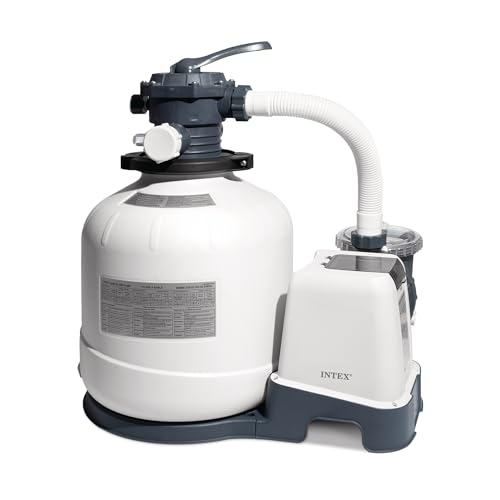
Intex pumps are built for performance and durability, making them the preferred choice for larger above-ground pools, typically 15 feet and up, or for households with heavy pool usage. The Intex Krystal Clear line is well-regarded for its strong flow rates, which range from 530 to 1,200 GPH in common models. This higher circulation capacity helps prevent the cloudy water issues that can ruin a swim weekend, providing faster turnover and better debris capture when paired with regular chemical maintenance. A key technical distinction for Intex pumps is the difference between the advertised "Pump Flow Rate" and the actual "System Flow Rate." For example, an Intex C530 pump may list a pump flow rate of 530 GPH, but its real system flow rate—the amount of water actually pushed through the hoses and filter—is closer to 475 GPH. For pool owners, prioritizing this system flow rate is essential for calculating whether a pump can handle your pool's gallon capacity within an 8-hour turnover window. While Intex offers robust performance, users should be aware that their proprietary hose fittings can make compatibility with non-Intex pools difficult without specific adapters.Head-to-Head: Flow Rate and Turnover Efficiency
When you are staring at two pump boxes, the most critical number to look at is not the one printed in the largest font. Manufacturers list two flow rates: the 'Pump Flow Rate,' which is the motor's raw capacity, and the 'System Flow Rate,' which accounts for the resistance from hoses and filters. As a pool pro, I always prioritize the System Flow Rate because that is the actual metric for water turnover. For example, an Intex Krystal Clear C530 pump lists a pump flow rate of 530 GPH, but its true system flow rate is 475 GPH. This distinction is vital for calculating if a pump can handle your pool's volume. Intex pumps generally offer higher flow rates than Bestway pumps, making them the better choice for larger pools (15 feet and up) or setups with heavy usage. According to industry data, common Intex models range from 530 to 1,200 GPH, while Bestway pumps typically sit between 330 and 800 GPH. A practical rule of thumb for sizing is to divide your pool's gallon capacity by 8; the result is the minimum system flow rate required to achieve one full turnover in an 8-hour window. If you have a 6,000-gallon pool, you need a pump with at least 750 GPH system flow, which points toward an Intex C1000 rather than a lower-flow Bestway model.Head-to-Head: Upfront Cost and Value
Bestway pumps are typically the budget-friendly workhorses, costing less upfront and serving as excellent options for smaller pools under 15 feet with light usage. If you have an inflatable or small frame pool that only gets used on weekends, the lower flow rate of a Bestway pump rarely makes a noticeable difference in water clarity, allowing you to save money without sacrificing performance. These pumps use similar filter cartridges and are designed for simplicity, making them a solid choice for owners who want a "set it and forget it" solution for modest-sized water features. Intex pumps sit in a mid-range price bracket but offer a longer track record and stronger flow capabilities that justify the investment for larger setups. While the initial cost is higher than a basic Bestway unit, the increased circulation helps prevent the cloudy water that can ruin a weekend swim, especially in pools from 12 to 24 feet. For owners who plan to run their pumps for extended periods or manage heavier debris loads, the extra upfront cost of an Intex pump often translates to better long-term value by reducing the need for constant chemical adjustments or manual cleaning.Head-to-Head: Hose Compatibility and Plumbing
One of the most frustrating aspects of pool maintenance is plumbing compatibility, and both Bestway and Intex use proprietary hose fittings and adapters. This means you cannot simply swap a Bestway pump onto an Intex pool (or vice versa) without specific adapters and some patience. Intex owners frequently complain that replacement hoses and adapters are hard to match with non-Intex pools, creating a walled-garden effect where you are locked into the brand's ecosystem for replacements. Bestway pumps face similar restrictions, using proprietary fittings that are mostly Bestway-only. While this ensures a tight seal for the specific pool models they are designed for, it limits flexibility if you ever decide to upgrade your pool shell or mix and match components. For pool owners deciding between brands, this is a key consideration: if you already have a pool with specific port sizes, you must ensure the pump you buy matches those fittings or be prepared to purchase the necessary conversion adapters to make the connection work.Head-to-Head: Filtration Performance and Dead Zones
Filtration performance goes beyond just moving water; it is about ensuring every part of the pool gets circulated. Intex Krystal Clear pumps are known for clearing up green or murky water noticeably quicker when paired with regular chlorine maintenance, thanks to their higher flow rates and aggressive filtration. This stronger circulation is essential for larger volumes where stagnant water can lead to algae blooms, ensuring that the water turns over efficiently and stays crystal clear. Bestway pumps, while reliable for smaller setups, can struggle to fully circulate larger volumes, leading to 'dead zones' where algae can start to grow. These dead zones occur when the pump's flow rate is insufficient to push water into all corners of a large pool, creating areas where debris settles and chemicals don't distribute evenly. For owners with pools under 15 feet, this is rarely an issue, but for anyone with a larger frame pool, the lower flow rate of a Bestway pump may require longer run times or supplemental cleaning to maintain water quality.Who Should Choose Bestway Pool Pump?
Bestway pool pumps are the practical choice for homeowners with smaller above-ground pools, typically those under 15 feet in diameter, or for those with light usage patterns like weekend-only swimming. If your primary constraint is upfront cost, Bestway models generally offer a lower initial investment while still providing reliable circulation for compact setups like Easy Set or Steel Pro pools. These pumps are well-suited for inflatable or frame pools where the water volume is manageable, and the lower flow rate does not create significant dead zones where algae can take hold. For budget-conscious owners who plan to run the pump on a scheduled basis rather than leaving it running unattended for days, Bestway delivers the necessary filtration without the premium price tag of higher-flow alternatives.
Who Should Choose Intex Pool Pump?
Intex pool pumps are the recommended option for owners of larger pools, specifically those 15 feet and up, or for families that use their pool heavily throughout the week. If you need a long track record of performance and stronger flow rates to handle larger water volumes, Intex Krystal Clear pumps provide the higher system flow rates necessary to prevent cloudy water and ensure proper turnover. These pumps are ideal for setups where faster circulation is critical to maintaining crystal-clear water, particularly in pools holding several thousand gallons. Owners who prioritize aggressive filtration and have the flexibility to manage the proprietary hose fittings should lean toward Intex, as their higher flow capacity helps keep larger pools balanced and free of debris more effectively than lower-flow alternatives.
Our Verdict
Choosing between a Bestway and an Intex pool pump isn't about which brand is "better" in a vacuum; it's about matching the motor's muscle to your pool's volume and your maintenance habits. If you are running a smaller above-ground pool—under 15 feet in diameter—with light weekend usage, the Bestway Flowclear series is the pragmatic choice. These pumps offer a lower upfront cost and are perfectly capable of keeping the water clear in compact setups without breaking the bank. However, you must be vigilant about circulation; in larger volumes, lower-flow Bestway pumps can create "dead zones" where algae takes hold before the filter catches it.
For anyone with a pool 15 feet and up, or a setup that sees heavy daily use, Intex is the stronger performer. Their Krystal Clear pumps generally deliver higher system flow rates, meaning faster water turnover and quicker clarification of murky water. The trade-off is that Intex pumps often come with a higher initial price tag and proprietary hose fittings that can make swapping components between brands a hassle. Ultimately, if your priority is long-term reliability and aggressive filtration for a larger body of water, invest in the Intex. If you are budget-conscious and keeping it small, the Bestway gets the job done efficiently.
Frequently Asked Questions
Can I use a Bestway pump with an Intex pool, or vice versa?
Not directly without modification. Both Bestway and Intex use proprietary hose fittings and adapters. Mixing a Bestway pump with an Intex pool (or vice versa) requires specific adapters and some plumbing patience, as the connection points are not standard across brands.
Which flow rate number should I trust when comparing pumps: Pump Flow Rate or System Flow Rate?
Always prioritize the 'System Flow Rate.' The 'Pump Flow Rate' listed on the box is the motor's theoretical capacity, but it does not account for resistance from hoses and filters. The System Flow Rate is the actual amount of water moved through the system and is the accurate metric for calculating pool turnover.
How do I know if a pump is the right size for my pool?
Use the 8-hour turnover rule. Divide your pool's total gallon capacity by 8. The result is the minimum System Flow Rate (in GPH) your pump needs to achieve one full water turnover in an 8-hour window. For example, a 3,800-gallon pool requires a pump with at least 475 GPH system flow.
Is Intex better than Bestway for larger pools?
Generally, yes. Intex pumps typically offer higher flow rates, making them better suited for larger pools (15 feet and up) or heavily used setups. Bestway pumps are often cheaper upfront but have lower flow rates, which can lead to 'dead zones' in larger volumes where algae may start to grow.
What is the main trade-off between choosing Bestway or Intex?
The choice usually comes down to budget versus performance. Bestway is the recommendation for budget-conscious owners with smaller pools (under 15 feet) and light usage. Intex is recommended for those needing a long track record, stronger flow rates, and better circulation for medium to large frame pools.


